Alpha Metering is a reseller and utility-management provider for electricity, water, gas and, where applicable, sanitation.
Alpha Metering provides reliable prepaid metering and professional utility management solutions that make electricity, gas and water easier to measure, manage and control.
We help property owners, body corporates, homeowners’ associations, managing agents and residents take greater control of their utility consumption and costs through accurate metering, convenient prepaid solutions and responsive support.
We measure it. We manage it. You stay in control.
We are more than simply a prepaid-meter supplier. The stronger story is utility management, accurate metering, cost control and making electricity/water management easier for property owners and residents. A recent independent description similarly identifies Alpha Metering as a reseller and utility-management provider for electricity, water, gas and, where applicable, sanitation.
![]()
End-to-end administration of electricity and water accounts for properties, complexes and estates
![]()
Seamless billing, collections and account reconciliation handled on your behalf
![]()
Dedicated support for body corporates, managing agents and property owners
![]()
Real-time monitoring and reporting of consumption across multiple units
![]()
Proactive management of meter faults, queries and tenant-related issues
![]()
Precision prepaid and conventional metering solutions for electricity, gas and water
![]()
Dependable, tamper-resistant technology that delivers transparent readings
![]()
Automated data capture that eliminates estimated billing and human error
![]()
Clear, verifiable consumption records for both owners and residents
![]()
Regular meter audits and verification to maintain measurement integrity
![]()
Transparent visibility of usage that helps identify and reduce wastage
![]()
Prepaid systems that put residents in control of their own consumption
![]()
Accurate billing aligned with municipal tariffs and actual usage
![]()
Early detection of leaks, faults or abnormal patterns that drive up costs
![]()
Practical tools and reporting that support better budgeting for property owners and residents
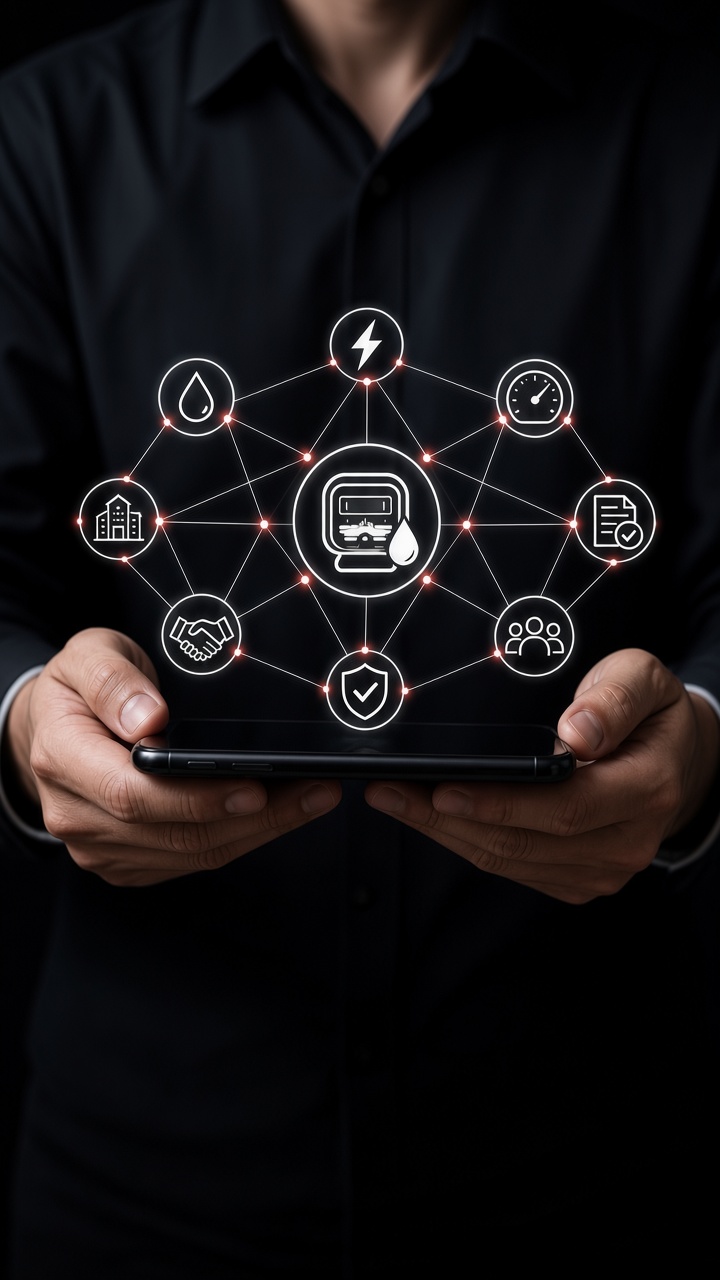
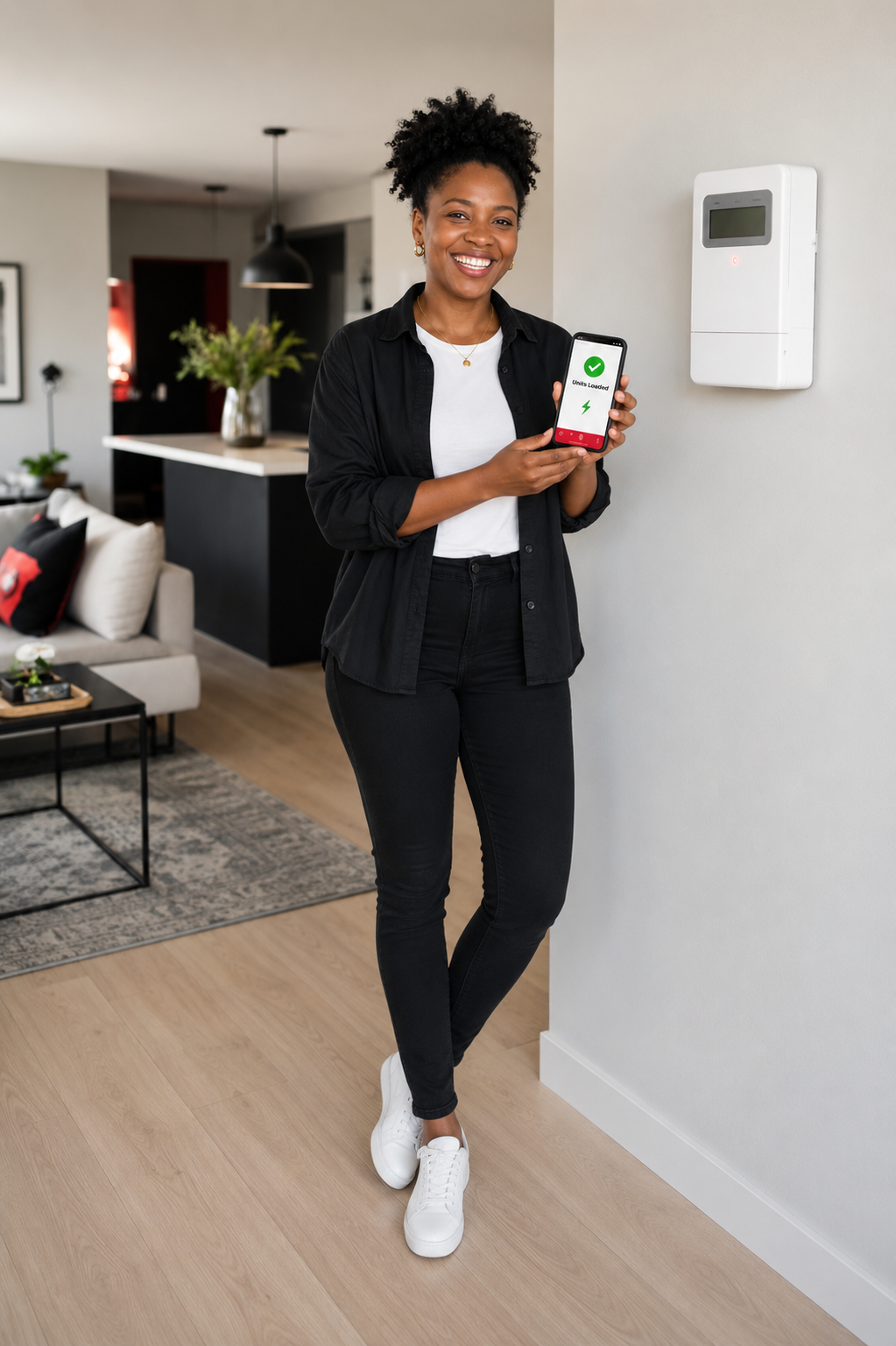
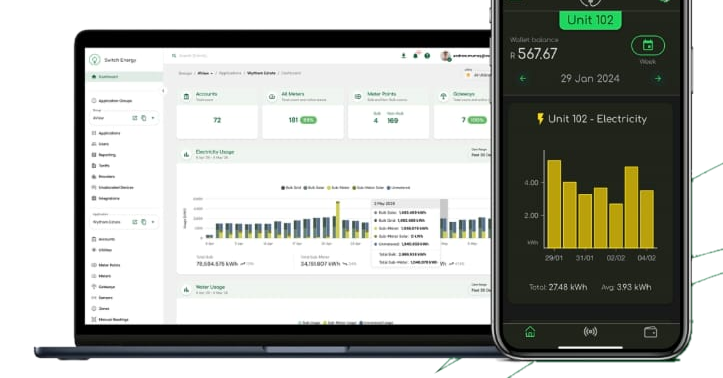
We’re bringing smart metering, a customer-facing mobile app and an integrated digital wallet together in one modern platform — giving property owners and residents better visibility, control and convenience over their utility usage and payments.
SMART METERING
We’re bringing smart metering, a customer-facing mobile app and an integrated digital wallet together in one modern platform — giving property owners and residents better visibility, control and convenience over their utility usage and payments.
Automated, accurate consumption data — no more manual readings
Reduced administrative costs on inspections and account queries
Greater visibility into irregular usage, tampering and other exceptions
Centralised, real-time consumption and payment monitoring
A scalable foundation for future digital utility management
View current and historical utility consumption anytime
Check available wallet balance and payment history
Purchase or load utility credit on the go
Receive low-balance alerts and account notifications
Access account, meter and consumption information directly
HOW TO BUY AND LOAD ELECTRICITY
UNIPIN INSTRUCTIONS: Dial *120*41589#PINNumber*MeterNumber#
Now press “Call”. Your request will be processed and you will receive your token via SMS.
IF ALL ELSE FAILS, CONTACT OUR FRIENDLY STAFF.
ON 010 006 5546
Vendors: ABSA, Capitec, FNB, Nedbank, Standard Bank, Unipin, African Bank, Engen, BP, Sasol, Shell.
Buy a voucher via online banking.
Log into your online banking and select “buy electricity”.
Enter your meter number on your banking app.
Enter the amount you choose to purchase.
Enter your cellphone number.
You will receive a 20-digit token via SMS on your mobile. Enter the token into your prepaid meter.
Go to your nearest Store as shown below.
Ask the operator for an Unipin voucher.
Ask the operator for the amount you wish to purchase.
You will receive a 9-digit voucher PIN.
SMS your 11-digit meter number & voucher PIN to 41589.
Unipin will forward a 20-digit token number to your phone to insert into the prepaid meter.
Or follow the instructions on the slip.
Buying prepaid electricity has become as easy as getting your phone out and pressing a few buttons. In the blink of an eye, you can recharge your “batteries” and enjoy reading at night.
No hassle and no loss of time, without a need to plan ahead, it is no wonder prepaid electricity meters have gained interest within the South African population!
According to most professionals, turning off your geyser will not save much electricity. You will only see 10°C of heat loss in the 24 hours after your geyser is switched off. This is what is called ‘standing loss’ and this is also a quality standard set forth by the SABS. This fact is included in Eskom’s Geyser Fact Sheet.
Prepaid electricity meters offer consumers greater control over their electricity usage and expenditure. It further helps to reduce energy consumption and promote energy conservation.
Tariffs are the same for prepaid and conventional meters.
By turning off lights, unplugging electronics when not in use and using natural light during the day by opening curtains and blinds, you can save quite a bit on electricity.
Once the challenges of a prepaid electricity meter has been adopted, it’s a real pleasure to have one. Some of the main challenges are monitoring the device for recharging.
With prepaid electricity the cheaper units of a sliding scale are granted on your first purchase of every calendar month, irrespective of when that is.
Why did prepaid meters stop working in 2024? Yes, it’s true. In fact they were set to stop working on 24 November 2024. This was due to a data rollover issue, known as token identifier (TID). However, we were prepared for a very long time and have successfully re-programmed all our meters.
Geysers are at number 1. Around 240 kilowatt hours per month at roughly R840.00
Heaters are about R630.00 per month during winter
Stove/oven use around R475 per month
Tumble dryer/pool pumps – R315 per month
Airfryer – R160 per month
Fridge/washing machine – R 140.00 per month
Dishwasher – R110.00 per month
Kettle, TV, Microwave, gaming consoles– R115.00 per month
Bottom of the list– Toaster, Iron, Wi-Fi router, phone charges
Have the hot water cylinder (geyser) thermostat set as low as the household’s hot water demand will permit -Recommended temperature setting is 55°C.
Laptops and cell phone chargers that are not in use are sucking power out of your home. Owners are the main culprits here, especially with screen savers floating around on laptops. Unplug your laptops and charger or switch it off at the power socket when not in use.
TV sets are fitted with a stand-by mode i.e., you do not actually switch the TV off. If you only watch TV when you get home in the evening, imagine how much power has gone to waste. Switch your TV off at the power socket when not in
use.
A CD, DVD or Blue Ray player is a huge energy waster, and they constantly use up power unless you switch them off at the power socket. Models that feature LED clocks and run messages across the display are the biggest culprits.
Oven: Use the microwave when you can. One oven or stove top will use the same amount of power as 17 microwaves.
Make sure that the bottoms of pots and frying pans are flat so that good contact can be obtained between the stove plates and the pots/pans. For stoves with the heavy solid plates which retain their heat, switch off the plate a few minutes before removing the pot. Small pots should be heated on the stove small plates to avoid unnecessary heat loss.
Fridge: Always make sure you properly close the fridge and freezer doors. They lose air quickly; therefore, it will use more power to cool down again. Do not place hot food in the refrigerator or deep freeze. Allow it to cool externally first.
Invest in a few multi-plug adapters for your power outlet sockets so that you can effectively and permanently switch off appliances when not in use.
Kettles: Only heat the amount of water you need, do not fill the entire kettle as this will take longer to heat and use more power. Boil water in the kettle before adding it to the pot for cooking as it will heat up quicker, making you use less oven power.
Sit as close as possible to a heater to avoid as far as possible the need to have both elements switched on together. Switch off the heater when leaving the room for any length of time. When using heaters or air conditioners, limit or restrict as far as possible the opening of windows.
Curtains help to retain the heat in a room. Draw the curtains early in the evening especially during wintry weather. It is cheaper to use an electric blanket than to heat the bedroom with a heater.
Dishwashers and washing machines should only be used when one has a full load to wash and not just a few items At the end of the day when you add it all up, ‘vampire’ appliances are consuming energy, wasting your money, and adding to your carbon footprint. Do the right thing and switch them off at the plug.
Swimming Pools:
– Operate the filter pump for minimum periods.
– During winter algae growth is restricted and the use of the filter cleaning system can be limited to once every few days.
To minimise the load on the electrical network in the country try to avoid the use of high consuming appliances during the evening peak hours of 17:00 to 22:00. These appliances include heaters, air conditioners, stoves, hot water geysers, tumble dryers, washing machines, dishwashers, and swimming pool pumps

Listen for water trickling into the toilet bowl. Press a piece of paper against the inside back surface of the bowl. If it gets wet, you have a leak. Put 15 drops of food colouring into the toilet cistern. If after 15 minutes the water in the toilet bowl has changed colour, there is a leak.
A single flush consumes between 9 to 12 litres. Rather use greywater to flush the toilet. Greywater is wastewater from non-toilet plumbing fixtures such as showers, basins, and taps. There are some simple, economical ways to flush a toilet with greywater.
The easiest way: The bucket flush method – Lift the lid of the toilet, pour greywater directly into the bowl. This will create a siphon affect and the contents of the bowl will empty.
Reuse your water to save water and pay less. At present, most homes use municipal drinking water for everything in the house and garden. We are flushing our drinking water down the toilet!
Close toilets stop-cock (this is the tap / valve next to your toilet). You will save municipal water. By closing this tap permanently, you are forced to use greywater.
Collect as much washing water as possible and re-use for flushing toilets. Excess greywater can be used for plants or washing vehicles. Did you know: Reusing greywater for toilet flushing can save approximately 50 L of drinking water in an average household every day.
Take short, stop-start showers. Wet your body, Turn off the tap, soap, rinse quickly. Save water and energy by reducing shower times to 4 minutes or less. Cutting your shower time by just 2 minutes can result in a water saving of up to 30%.
Try using a shower timer or your favourite 4-minute song to time your showers.
Do not let the taps run for too long at full flow. Wet your toothbrush, close the tap, and brush your teeth or use a cup of water for brushing teeth and shaving.